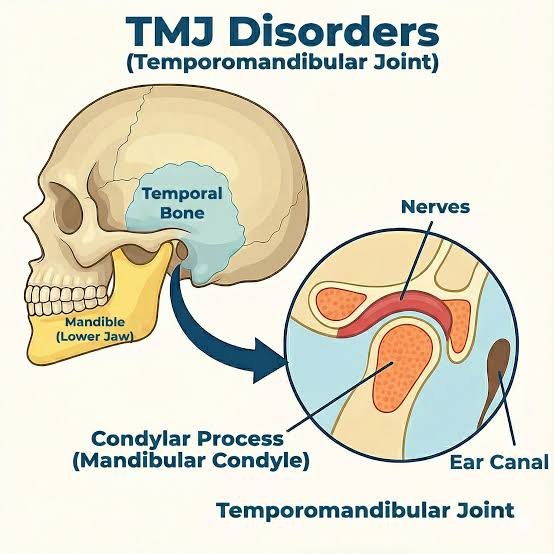
Temporomandibular Joint Disorder (TMD)
Temporomandibular Joint Disorder (TMD)
Suggested title: Temporomandibular Joint Disorder (TMD): Symptoms, Causes & Treatment
Introduction
Temporomandibular Joint Disorder (TMD) refers to a group of conditions affecting the temporomandibular joints, jaw muscles, and surrounding structures. These joints connect your lower jaw to your skull and play an important role in speaking, chewing, swallowing, and facial movement.
TMD can cause pain and discomfort in the jaw, face, ears, temples, and neck. Some people may also experience clicking sounds, difficulty opening their mouth, or jaw locking.
Common Symptoms
Symptoms of TMD may include:
- Jaw pain or tenderness
- Clicking, popping, or grinding sounds
- Difficulty opening or closing the mouth
- Jaw locking
- Facial pain
- Headaches or temple pain
- Ear pain or a feeling of fullness in the ears
- Pain while chewing
- Neck and shoulder discomfort
What Causes TMD?
TMD can develop for several reasons, including:
- Teeth grinding or clenching
- Jaw injury or trauma
- Arthritis affecting the jaw joint
- Stress and muscle tension
- Problems with the jaw joint or disc
- Certain dental or bite-related issues
How Is TMD Diagnosed?
A TMJ specialist may assess your jaw movement, muscle tenderness, bite, and joint sounds. Depending on your symptoms, imaging such as X-rays, CT scans, or MRI scans may be recommended.
Treatment Options
Treatment depends on the underlying cause and severity of the condition. Options may include lifestyle changes, physical therapy, medication, dental appliances, injections, or other specialised treatments.
If you experience persistent jaw pain, difficulty opening your mouth, or recurring jaw symptoms, professional evaluation can help identify the underlying cause.